
Mathematics Exam Revision Tips
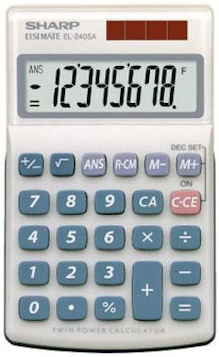
A common stress students experience is preparing themselves for exams and Mathematics exams in particular.
During the long hours of revision the free resources on this website may provide the help you are looking for. There are self-marking exercises on all the basic school mathematics concepts along with puzzles, games and investigations all designed to support your learning.
The Basics
It is probably fair to say, that the biggest obstacle to achieving a good grade is a poor grasp of the basic concepts. You probably won't be surprised to know that the reason you may be inefficient at factorising algebraic expressions is because you don't have a good enough knowledge of the multiplication tables. How can you be expected to apply geometrical theorems when you have forgotten the names and properties of basic shapes? You would be a lot happier thinking your answers to exam questions were reasonable if you had the skills of estimation and a familiarity with common units of length, weight and capacity as modelled by common household objects.

Image courtesy of photostock FreeDigitalPhotos.net
Quick Links
- Checklists
- Exam Tips Presentation
- Past Paper Questions
- National Curriculum
- Key Stage 2 Tests (SATs)
- Maths Map
Syllabus Links
- GCSE GOV.UK
- GCSE OCR
- GCSE AQA
- GCSE EdExcel
- IGCSE Cambridge
- A Level OCR
- A-Level AQA
- IB Analysis and Approaches
- IB Applications and Interpretation
Create An Account
Your parents can sign up for a 12-month subscription to Transum and help you with their access to the answers and ad-free access.
Here are the top five tips for productive Maths revision:
- Actually doing exercises and solving problems is much better than reading, watching or listening;
- Get rid of those distractions whatever they are. Turn off your phone, move away from the TV and save game playing till later;
- Variety is the spice of life! Try some past paper questions then change to working through an online exercise. Play a mathematical game then make a key facts poster. Keep it interesting;
- Make yourself a revision schedule. Balance your Maths revision with the revision you have to do for other subjects. Some say 'a little and often' is better than a long, tiring revision marathon;
- Get a friend, teacher, parent or answer book to check your work. You don't want to be practising incorrect methods do you?
The Pomodoro Technique
This studying strategy is a simple time-management method developed by Francesco Cirillo in the 1980s. Its name comes from the Italian word for tomato, because Cirillo used a tomato-shaped kitchen timer when he was experimenting with ways to stay focused as a student. The idea is that revision can feel less overwhelming when it is broken into short, clearly timed sessions rather than treated as one long, vague task.
A typical Pomodoro session involves choosing one specific task, working on it with full concentration for 25 minutes, then taking a short break of about 5 minutes. After four of these focused sessions, a longer break can be taken. During the working time, distractions should be avoided as far as possible: no phone checking, no tidying the desk, no drifting onto another subject. The timer creates a small but useful sense of urgency, while the break makes it easier to return refreshed for the next burst of concentration.
For maths revision, the technique works best when each timed session has a precise mathematical aim. For GCSE, a student might spend one Pomodoro practising expanding brackets, solving simultaneous equations or completing ten ratio questions. For A Level or International Baccalaureate Mathematics, a session might focus on a particular skill such as differentiating trigonometric functions, using the binomial expansion, working through a statistics problem, or reviewing one past-paper question carefully. The important point is to use each session actively: doing questions, checking answers, correcting mistakes and noting down anything that needs to be revisited later.
Regular Revision
We all know that regular exercise is required to maintain a healthy body. In a similar way the brain needs regular practice doing Mathematics in order to do well in the subject. There are hundreds of online exercises here on the Transum website ranging from simple arithmetic to calculus. You can work on these exercises knowing that they are self-marking so you can get immediate feedback as to whether the answer is correct or not.
Basic Arithmetic
Yes, even though it is 2026 and technology is everywhere, you still need to know your times tables. Whatever your age, you need to learn and practice the times tables from two to twelve to support the other areas of Mathematics.
Transum has a 'Learn a new times table in only 5 days' page which links to activities we know work well in developing the skills, knowledge and understanding.
Final Exam Preparation
There is nothing like an exam to focus attention on the learning of Mathematics. At exam time of year you need a little extra support ensuring that everything goes well.
Firstly having a positive, 'can do' attitude is most important.
Secondly finding a quiet place in the house to revise is crucial, away from the temptations of the television and video games.
Thirdly ensure that you have the right equipment you need for the exam including a pen (and a spare), pencil (and a spare), the correct type of calculator, a good pair of compasses, ruler, protractor and eraser (rubber).
In exams marks are awarded for the 'working out' even if the answer is wrong. A large proportion of students are still not showing their method in a clear, ordered way and this is something you can work on.
Finally have a look at these Exam Tips and above all don't panic!
Featured Activity
Tran Towers

A mathematical adventure game in the enigmatic home of Transum. Create your own map as you go deeper and deeper into this maze of rooms looking for the clues to find the treasure room.

Nothing quite compares to the satisfaction of sitting an exam after thorough preparation. It's a moment where you can truly revel in showcasing your mastery of the subject matter and your ability to adeptly apply it to tackle challenges. Demonstrating your knowledge and skills to the examiner becomes a rewarding experience, and you will come out of the exam room beaming!
Do you have any comments? It is always useful to receive feedback and helps make this free resource even more useful for those learning Mathematics anywhere in the world. Click here to enter your comments.