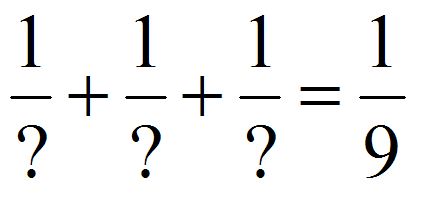
Three fractions add together to give one ninth.
If all the question marks represent the same number, what is that number?
What if all the question marks represent different numbers?
Topics: Starter | Fractions | Investigations
How did you use this starter? Can you suggest
how teachers could present or develop this resource? Do you have any comments? It is always useful to receive
feedback and helps make this free resource even more useful for Maths teachers anywhere in the world.
Click here to enter your comments.
Previous Day | This starter is for 31 January | Next Day
Sign in to your Transum subscription account to see the answers
See also the Starter called One Fifth and a related GCSE question.
Your access to the majority of the Transum resources continues to be free but you can help support the continued growth of the website by doing your Amazon shopping using the links on this page. Below is an Amazon link. As an Amazon Associate I earn a small amount from qualifying purchases which helps pay for the upkeep of this website.
Educational Technology on Amazon


|
Teacher, do your students have access to computers such as tablets, iPads or Laptops? This page was really designed for projection on a whiteboard but if you really want the students to have access to it here is a concise URL for a version of this page without the comments: Transum.org/go/?Start=January31 However it would be better to assign one of the student interactive activities below. |
|
Here is the URL which will take them to a related student activity.
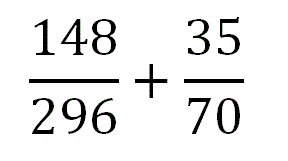
What is unique about this fraction sum?
One third of my family understand fractions while the other three quarters do not. I wonder which half of the family I am in!