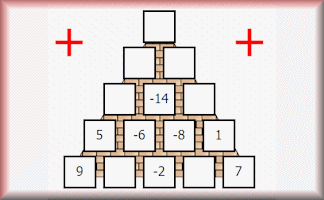
Put the numbers 1 to 5 in the bottom row of this pyramid. They can be arranged in any order. The numbers in the other bricks are found by adding the two bricks immediately below together. What arrangement of the numbers in the bottom row gives the largest total in the top brick of the pyramid?
What arrangement gives the
smallest total in the top brick
of the pyramid?
A pyramid puzzle worksheet is available here
Teacher:
Scroll down the
page to find the
link to the interactive, self-checking pupil version of Pyramid Puzzle.
Topics: Starter | Algebra | Arithmetic | Functions | Number | Problem Solving
How did you use this starter? Can you suggest
how teachers could present or develop this resource? Do you have any comments? It is always useful to receive
feedback and helps make this free resource even more useful for Maths teachers anywhere in the world.
Click here to enter your comments.
Previous Day | This starter is for 4 January | Next Day
Sign in to your Transum subscription account to see the answers
There is a printable worksheet to go with this activity.
Your access to the majority of the Transum resources continues to be free but you can help support the continued growth of the website by doing your Amazon shopping using the links on this page. Below is an Amazon link. As an Amazon Associate I earn a small amount from qualifying purchases which helps pay for the upkeep of this website.
Educational Technology on Amazon


|
Teacher, do your students have access to computers such as tablets, iPads or Laptops? This page was really designed for projection on a whiteboard but if you really want the students to have access to it here is a concise URL for a version of this page without the comments: Transum.org/go/?Start=January4 However it would be better to assign one of the student interactive activities below. |
|
Here is the URL which will take them to the student version of this activity.
Here is another activity using the same idea but introducing nagatives and fractions.