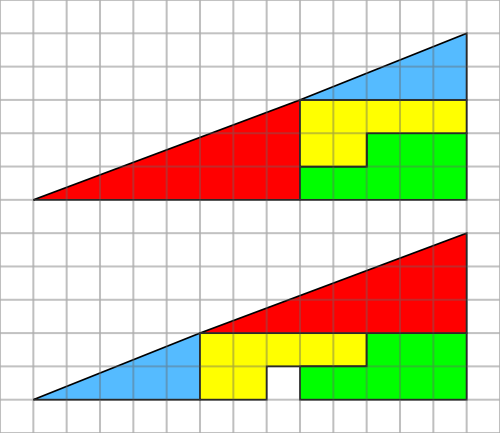
The four coloured pieces can be put together in two different ways to make these shapes with base 13 units and height 5 units. Why is there one square missing in the second arrangement?
Topics: Starter | Area | Mensuration | Puzzles | Ratio | Shape
Here's a classic 'Missing Square' dissection. The pieces don't change area. Where does the square come from? Attributed to Mitsunobu Matsuyama. Interactive @geogebra file here: https://t.co/ffBYXQYFYy pic.twitter.com/ZFLvsxzdda
— Ben Sparks (@SparksMaths) February 27, 2021
How did you use this starter? Can you suggest
how teachers could present or develop this resource? Do you have any comments? It is always useful to receive
feedback and helps make this free resource even more useful for Maths teachers anywhere in the world.
Click here to enter your comments.
Previous Day | This starter is for 26 July | Next Day
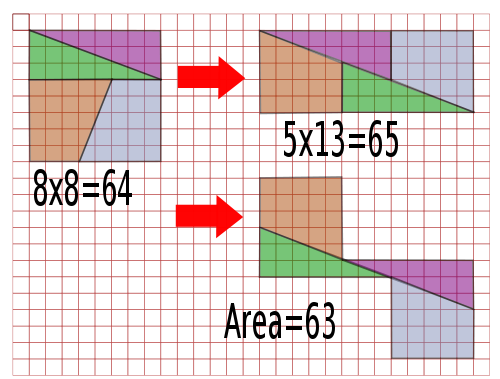
Sam Loyd presented this Chessboard Paradox at the American Chess congress in 1858. Notice the Fibonacci numbers which can be found in both of these diagrams.

As you probably guessed, even though the red lines don't look parallel they actually are.
Your access to the majority of the Transum resources continues to be free but you can help support the continued growth of the website by doing your Amazon shopping using the links on this page. Below is an Amazon link. As an Amazon Associate I earn a small amount from qualifying purchases which helps pay for the upkeep of this website.
Educational Technology on Amazon
Sign in to your Transum subscription account to see the answers


|
Teacher, do your students have access to computers such as tablets, iPads or Laptops? This page was really designed for projection on a whiteboard but if you really want the students to have access to it here is a concise URL for a version of this page without the comments: Transum.org/go/?Start=July26 However it would be better to assign one of the student interactive activities below. |
|
Here is the URL which will take them to a related student activity.
The images on this page are from the Wikimedia Commons. The descriptions of the licences can be found on the following pages: Missing Square Puzzle and Sam Lloyd Image.