House Numbers

A Maths Starter of The Day

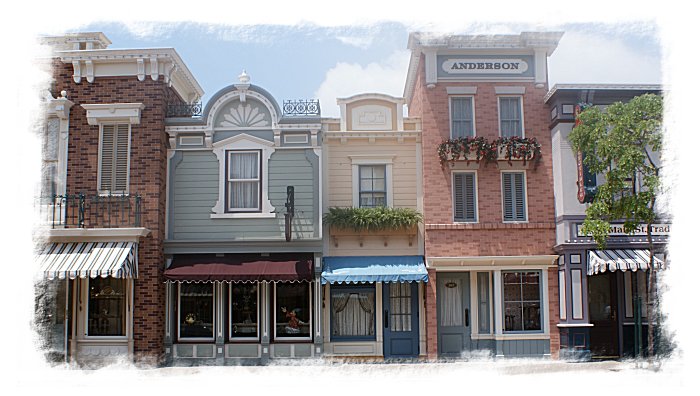
Houses next to each other

The numbers on five houses next to
each other add up to 110.
What are those five numbers?


Starter of The Day Menu | Transum Software | Privacy Policy


Keywords: Starter | Averages | Number Patterns | Puzzles | Sequences

  • Sarah Sergeant, djsergeant@blueyonder.co.uk
  • Thursday, January 15, 2009
  • "My Year 5 students love these starters but how do I get the problem up full screen every day?"
  • Transum,
  • Saturday, January 17, 2009
  • "Hi Sarah, If you are using Internet Explorer press the F11 key to hide the toolbars. Press F11 a second time when you want to show them again. Alternatively the View menu has a Toolbars option you can use to hide elements of the browser."
  • Looby Loo, England
  • Sunday, January 25, 2009
  • "Well done, you've got me here, I haven't got a clue. Is there a way of working out the answer?"
  • Lara k, England
  • Sunday, January 25, 2009
  • "If you find the average by dividing the total by 5 this gives you the number of the middle house and then the rest is easy, hope this helps."
  • Holyrood sec school Glasgow, Mrs O'Hagan's 3rd yr class
  • Monday, January 26, 2009
  • "Enjoyed the starter which led to a discussion about delivering papers!
    We moved on to talking about seven houses etc"
  •  

  • Anne Carlill, Adult Tutor, Leeds City College
  • Monday, January 18, 2010
  • "What a good starter! One of my group was working on odd and even numbers and another one on algebra. With some hints for the learners who are not so far along on their maths journey, this starter works for everyone at all levels."
  • Mark Edgar, Lincoln Christ's Hospital School
  • Monday, January 25, 2010
  • "Thanks for this starter which has produced a nice discussion in my classes. The normal rule for numbering streets is that they start from the end nearest the city/town/village centre and have the odd numbers on the left. Few streets have the nubers consecutively on one side, but one notable exception is Lincoln High Steet which is numbered consecutively starting from the southern end on the left hand side, going to the northern end then returning on the right hand side (finishing in the 500s, I think). This causes no end of confusion!"
  • Vicki,
  • Sunday, January 16, 2011
  • "Or if you think of the first house as x then x + x + 1 + x + 2 + x + 3 + x + 4 = 45.
    So 5x + 10 = 45
    5x = 35
    x = 7.
    So the first house is 7."

How did you use this starter? Can you suggest how teachers could present or develop this resource? Do you have any comments? It is always useful to receive feedback and helps make this free resource even more useful for Maths teachers anywhere in the world.
Click here to enter your comments.

If you don't have the time to provide feedback we'd really appreciate it if you could give this page a score! We are constantly improving and adding to these starters so it would be really helpful to know which ones are most useful. Simply click on a button below:

Excellent, I would like to see more like this
Good, achieved the results I required
Satisfactory
Didn't really capture the interest of the students
Not for me! I wouldn't use this type of activity.

This starter has scored a mean of 3.6 out of 5 based on 80 votes.


Previous Day | This starter is for 26 January | Next Day


Transum Shop Visit the Transum Online Shop Transum Shop
Transum Shop


Answers

HouseHouseHouseHouseHouse

If the houses are numbered consecutively they could be:

20, 21, 22, 23 and 24

If however, the street has odd numbers on one side and even numbers on the other they could be:

18, 20, 22, 24 and 26


Maths is Important!

"Mathematics equips pupils with uniquely powerful ways to describe, analyse and change the world. It can stimulate moments of pleasure and wonder for all pupils when they solve a problem for the first time, discover a more elegant solution, or notice hidden connections. ...

Mathematics is a creative discipline. The language of mathematics is international. The subject transcends cultural boundaries and its importance is universally recognised. Mathematics has developed over time as a means of solving problems and also for its own sake."

Qualifications and Curriculum Authority

Loading...

www.Transum.org